Failure rates eating your budget: 10 GB for $10 to measure it on your target
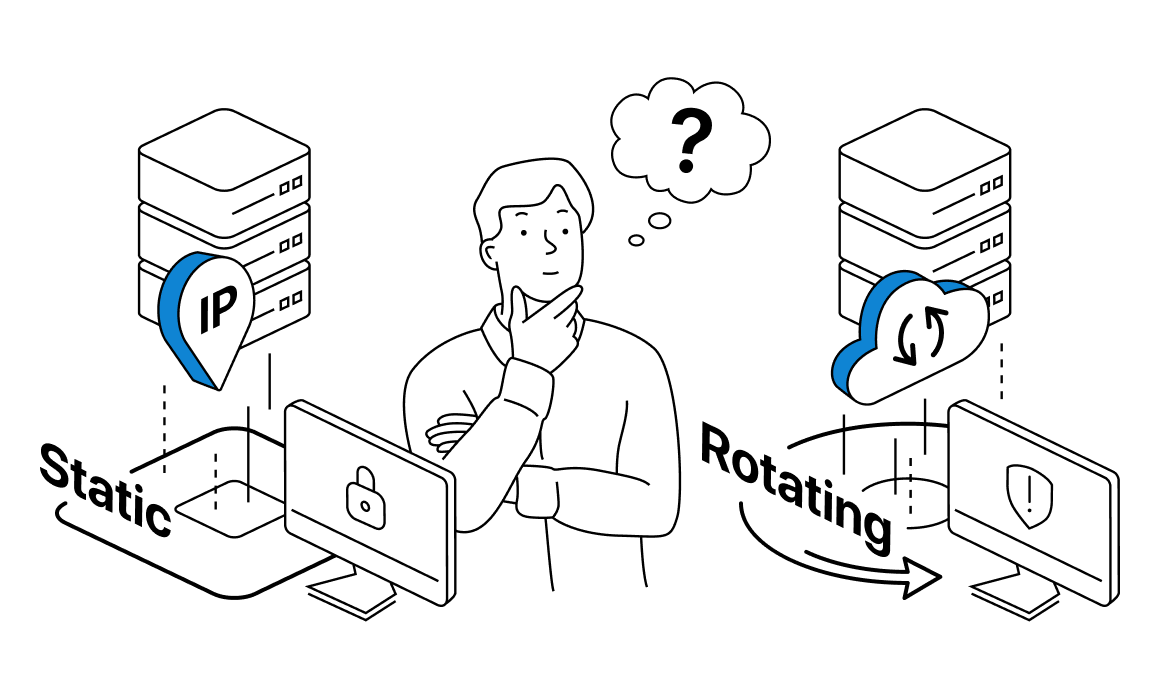
While choosing the right proxy type for your missions, you will inevitably come across the issue of selecting proxies by their origin and the mode of operation. You can have static proxies with constant IPs or rotating proxies with different IPs assigned to them from a pool on each session or after a certain time interval.
Failure rates eating your budget
10 GB for $10 to measure it on your target
If you ever tried to set up proxies in your browser, you might have noticed how much time and effort it takes to enter your proxy credentials inside your browser’s settings. If you are a Chrome user and you want to set up proxies for Google Chrome, for instance, you will need to go to Settings - Advanced Settings - Proxy Settings each time you need to change your proxy or its parameters.
When it comes to selecting an optimal set of paid proxies for your online mission, you might face a very tricky question: whether to go for residential proxies or datacenter proxies will do the job alright?
Proxy for a long time comes along with scraping, parsing, anonymization, and many other spheres of application. And residential IPs are still valued among the more pronounced options for any projects in this field. Let’s look at this server and type in all details.
To define the HTTP proxy meaning, we need to clarify the concept of the Internet protocols and their role in categorizing various proxy servers.
If you are ready to embark on a data harvesting mission or need to conduct a marketing research involving scraping info from an anti-bot protected website, you want to have the right tool to complete your mission without getting detected.
A random IP generated by a proper proxy can help you manage the situation.